Let's be honest, when you think about Duplex stainless woven wire mesh, it might not immediately conjure images of thrilling adventure. But for those of us navigating the nitty-gritty of industrial filtration and separation, this material is, frankly, a game-changer. It's the unsung hero that tackles some of the most aggressive and demanding environments out there, quietly outperforming its more conventional counterparts.
Why Duplex is the Go-To for Tough Jobs
You see, traditional austenitic stainless steels like 304 or even 316, while good, often hit their limits when faced with high chlorides, extreme temperatures, or significant mechanical stress. This is where Duplex stainless woven wire mesh steps in. Its unique microstructure – a balanced mix of austenite and ferrite phases – delivers a truly remarkable combination of properties. We're talking about significantly enhanced resistance to pitting and crevice corrosion, which is a big deal in seawater or chemical processing. In fact, many engineers I've spoken with swear by its ability to prevent stress corrosion cracking, a notoriously tricky problem.
Beyond corrosion, there's the sheer strength. Surprisingly, duplex stainless steel can be about twice as strong as standard austenitic grades. This means you can often use thinner wire or fewer support structures, leading to lighter, more efficient designs. It's an economic win-win, really.
Understanding the Technical Specs: What to Look For
When you're specifying Duplex stainless woven wire mesh, you'll delve into familiar territory for metal woven wire mesh, but with a critical material twist. Key parameters include mesh count (meshes per inch), wire diameter, aperture size, and weave type (plain, twill, Dutch weave being common). The most crucial aspect, though, is the specific duplex grade.
Typically, you'll encounter grades like 2205 (the most common, good all-rounder) and 2507 (Super Duplex, for even more aggressive conditions). The Pitting Resistance Equivalent Number (PREN) is a fantastic indicator here; the higher the PREN, the better the pitting corrosion resistance. For 2205, you're usually looking at a PREN of 32-39, while 2507 can hit above 40.
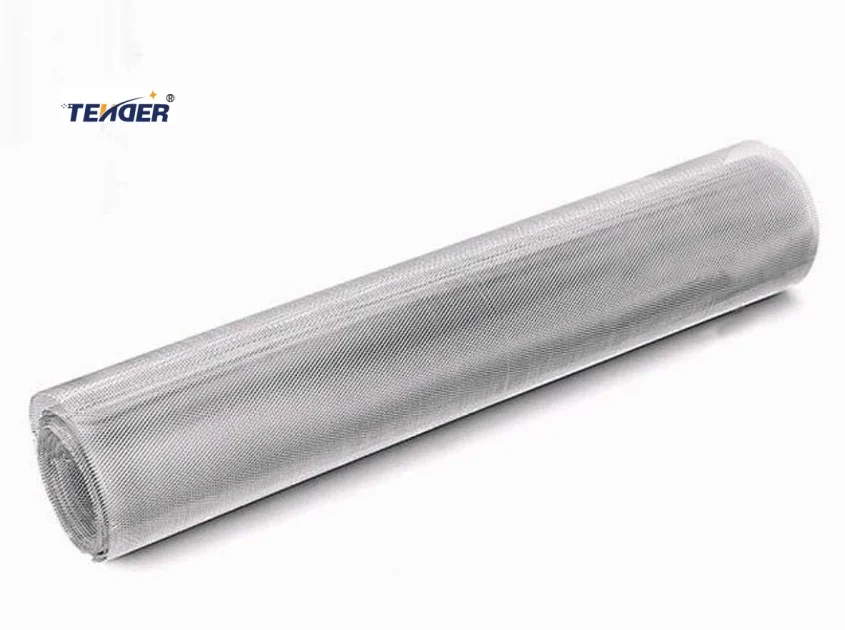
Typical Duplex Mesh Specifications (Example)
|
Parameter |
Value Range |
Remarks |
|
Material Grade |
UNS S31803 (2205), UNS S32750 (2507) |
Selection based on environment severity |
|
Mesh Count |
2-300 Mesh |
Customizable, real-world use may vary |
|
Wire Diameter |
0.03mm – 2.0mm |
Impacts strength and open area |
|
Weave Type |
Plain, Twill, Dutch |
Determines filtration performance |
|
Width |
≈ 1m, 1.2m, 1.5m |
Can be wider on request |
Where Does Duplex Mesh Truly Shine? Applications Galore!
Given its robust nature, Duplex stainless woven wire mesh finds its home in some pretty demanding sectors. Think about:
· Offshore and Marine: Desalination plants, oil & gas platforms, ballast water treatment systems – anything exposed to corrosive seawater.
· Chemical Processing: Filtration in aggressive chemical reactors, acid production, caustic environments.
· Pulp & Paper Industry: Screening applications where chloride-induced corrosion is a constant threat.
· Food & Pharmaceutical: While less common than 316L, it's used where extreme cleanliness and resistance to aggressive cleaning agents are paramount.
· Water Treatment: Critical filtration stages in municipal and industrial systems.
I've seen it used successfully as filter media, support grids, baskets, and even architectural elements in challenging coastal areas where longevity is key. Its service life in these conditions often far exceeds what you'd get from standard stainless steels, translating into lower maintenance and replacement costs over time.
The Journey from Wire to Woven Masterpiece
The creation of this specialized mesh starts with high-quality duplex stainless steel wire, meticulously drawn to precise diameters. This wire is then woven on sophisticated looms using various patterns, most commonly plain weave (for uniform openings), twill weave (for stronger, finer mesh), or Dutch weave (for excellent filtration efficiency). Quality control is paramount at every stage. Manufacturers typically adhere to international standards like ASTM E2016 for industrial woven wire mesh, and often internal tests for material composition (spectroscopy), tensile strength, and aperture size. Certifications like ISO 9001 are standard, providing assurance of consistent quality.
Navigating Vendor Choices & Customization
Finding the right supplier for Duplex stainless woven wire mesh is crucial. Not all vendors are created equal, and customization is often required for specific applications. Many customers say that working with a manufacturer who understands the nuances of material science and weaving techniques makes all the difference. You'll want to discuss everything from roll dimensions to specific cut pieces, edge treatments, and even fabrication into complex shapes.
Hypothetical Vendor Comparison
|
Feature |
Vendor A (Specialist) |
Vendor B (Generalist) |
|
Duplex Grade Availability |
2205, 2507, Custom |
Mainly 2205 |
|
Custom Weave Options |
Extensive, incl. special Dutch weaves |
Limited standard options |
|
Certifications |
ISO 9001, Material Test Reports |
Basic material certs |
|
Technical Support |
Dedicated engineers, application guidance |
Standard sales support |
|
Lead Time (Complex Orders) |
Moderate (around 4-6 weeks) |
Potentially longer or rejected |
In Conclusion: A Smart Investment
Ultimately, choosing Duplex stainless woven wire mesh isn't just about finding a filter; it's about investing in reliability, longevity, and superior performance in the face of adversity. While the initial cost might be slightly higher than some alternatives, the long-term savings from reduced maintenance, fewer replacements, and minimized downtime often make it the most economical choice. It's a testament to materials engineering, actually, solving real-world problems with robust solutions.
Authoritative Citations
1. ASM International. (2000). ASM Handbook, Volume 1: Properties and Selection: Irons, Steels, and High-Performance Alloys. ASM International.
2. ASTM International. (2010). ASTM E2016-10: Standard Terminology Relating to Industrial Woven Wire Cloth. ASTM International.
3. Gunn, R. (2003). Duplex Stainless Steels: Microstructure, Properties and Applications. Woodhead Publishing.
Anping Tengde Metal Wire Mesh Products Co., Ltd. Has been dedicated to the production and research and development of wire mesh products for 30 years. Leading Vibrating Screen It is a comprehensive department integrating production and processing, distribution and wholesale. Stainless steel mesh series, wire mesh products series, and filter elements and filter materials. Wire MeshWe can also produce various special-shaped net types and deep-processed net products according to customer needs and requirements. wire mesh suppliers All our products leaving the factory have undergone strict inspection to ensure that they are 100% qualified. Filtration Screens ManufacturerThe company adheres to the business philosophy of “technology leadership and quality victory”, and has nearly a hundred MID-to-senior level professional and technical personnel. wire mesh manufacturer We have maintained long-term and good cooperative relations with large domestic oil fields, coal mines, petroleum, machinery, chemical and other units, and have established good trade relations with more than 70 countries including the United States, Japan, Russia and Australia. Anping Tengde Metal Wire Mesh Products Co., Ltd.wire mesh screens suppliers Will continue to adhere to the tenet of “customer first, integrity-based”, and with the spirit of continuous innovation and win-win cooperation, forge ahead and challenge the future.wire mesh filter manufacturers|mesh wire suppliers